
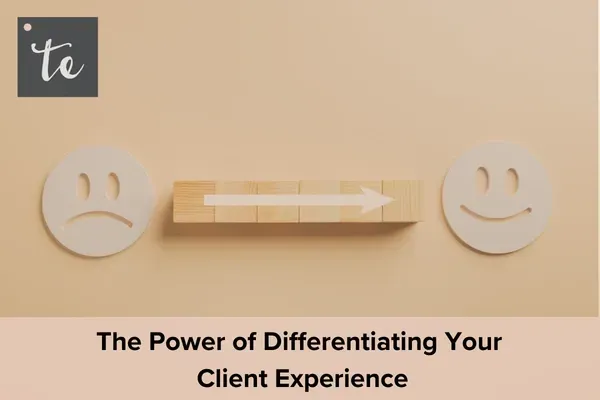
The Power of Differentiating Your Client Experience
What if one of your biggest growth opportunities wasn’t about doing more, but about being more intentional with the clients you already have?
In many firms, there’s a strong commitment to consistency. Providing a reliable, high-quality experience for every client feels like the right thing to do and in many ways, it is.
But it’s worth considering that not all client relationships contribute equally to your growth, your referrals or the long-term stability of your business.
That’s where a more intentional approach, often grounded in a clear understanding of your customer segments, can make a meaningful difference.
At The Expressory, we often talk about what happens when consistency unintentionally turns into sameness. In an effort to try to scale a wonderful client experience, we sometimes simplify so much that every client receives the same experience, regardless of their impact on your business. And that can influence how your most valuable clients feel about working with you.
The reality is, your top clients already understand the role they play in your business. The question becomes, does their experience reflect that?
When Sameness Starts to Limit Loyalty
The clients who fuel your business, the ones who generate the most revenue, refer others consistently and stay with you through market fluctuations, aren’t just looking for expertise. They’re looking for a relationship.
They want to feel seen, understood and genuinely valued.
When that experience doesn’t align with their expectations, they’re not going to raise their hand to say something is missing. Instead, over time, they disconnect and their loyalty starts to erode.
In some cases, that erosion eventually leads to a decision to leave.
Research shows that businesses lose 10–25% of their clients annually, often due to a lack of meaningful engagement rather than performance issues. In today’s digitally distracted world, even small missed opportunities to show you care can create larger doubts over time.
Where Do You Stand Today?
At The Expressory, when we onboard new clients one of the questions we ask is -- “Are your highest-value clients receiving a different, more thoughtful experience than the rest?”
We find the answers fall into one of four categories:
No Standardization: Each advisor approaches client relationships differently, with little consistency across the firm, especially for top-tier clients.
Same for All: Every client receives the same experience, regardless of their level of contribution or engagement.
Defined but Inconsistent: Client segments and differentiated experiences exist, but execution varies and follow-through is inconsistent.
Differentiated and Consistent: Top clients receive at least four meaningful, non-business touchpoints per year, delivered consistently.
Only a small percentage of firms have implemented a strategy to nurture relationships with their high- value clients at that final level. However, those who do often see measurable improvements in loyalty, referrals and retention. This is often the result of a more intentional segmentation strategy supported by ongoing segmentation analysis.
The Strategic Shift: Your Top 25 Clients
Here’s a simple place to start.
Take a moment, whether it’s a blank sheet of paper or a worksheet, and identify your top 25 high-value clients.
These are not just your highest revenue-generating clients. They are the individuals who:
Refer others regularly
Represent the type of client you want more of
Would be difficult to replace
Provide stability during uncertain times
Why 25? Because 25 is manageable. It allows you to be intentional, thoughtful and consistent without becoming overwhelming. This exercise is often the first step in understanding how to segment customers in a way that reflects real relationship value, not just revenue.
These are the relationships that deserve more than quarterly reviews and templated holiday messages.
What Does Differentiation Actually Look Like?
At The Expressory, we define a differentiated client experience as incorporating at least four personalized, non-business touchpoints per year.
These actions are going to be intentional, human moments that communicate, “I see you, and you matter.”
This might include:
A handwritten note recognizing a meaningful life event
A thoughtful gift that reflects a personal interest or hobby
A gesture of support during a challenging time
While these actions may seem small, they carry significant meaning in how clients experience your relationship.
Over time, these moments build what we call emotional loyalty. It’s a level of connection that makes your relationship far more difficult to replace.
And this is more than just a feel-good concept.
In our 2025 Strategic Engagement Index, we found that:
96% of business leaders believe showing care improves profitability
72% of leaders using engagement strategies reported moderate to high ROI
Firms with consistent engagement plans experienced higher retention and more referrals
The Science Behind the Strategy
According to the well known social psychologist, Dr. Harry T. Reis, lasting relationships are built on three key elements: felt understanding, validation and care.
When clients consistently experience these elements through intentional outreach, the relationship naturally deepens. Once that bond is established, it becomes significantly more resilient and far more difficult for competitors to disrupt.
This is about being thoughtful, relevant and consistent in how you show up, principles that sit at the core of any effective client segmentation strategy..
Start With a Simple Audit
If you’re not sure where to begin, start small.
Choose one of your Top 25 clients and ask yourself:
“When was the last time I connected with them about something outside of business?”
If nothing immediately comes to mind, that’s okay, it simply highlights an opportunity.
From there, consider creating a simple tracking system. Even noting the last personal touchpoint can help bring visibility and accountability to your efforts.
Once you can see the gaps, it becomes much easier to close them with intention.
Building More Intentional Growth
We’re operating in a world where people are constantly online, distracted and inundated with generic communication.
That creates an opportunity.
Real relationships have become a differentiator.
Clients are no longer satisfied with good service alone. They want to feel recognized, understood and valued. When you deliver that experience in a thoughtful and consistent way, your role naturally evolves from service provider to trusted partner.
And that’s where long-term growth really happens. Especially when your approach is informed by a clear understanding of what customer segmentation is in marketing and how it applies to your business.
5 Questions to Reflect On
If this has you thinking about your current client experience, that’s a good place to be. Here are five questions to help guide your next steps:
Have I clearly identified my Top 25 clients and why they belong there?
Look beyond revenue and consider referrals, longevity and alignment.When was the last time I connected with my top clients outside of business?
If it’s hard to recall, it may be time to re-engage more personally.Do I have a consistent plan for meaningful touchpoints each quarter?
Consistency is what turns good intentions into real results.Is my client experience truly differentiated, or simply consistent?
Would your top clients say they feel a difference?What’s one small action I can take this week to show a client they matter?
It doesn’t need to be big, just intentional.
Frequently Asked Questions
1. Is it "fair" to give some clients a better experience than others?
In business, "fair" doesn't have to mean "identical." Every client deserves high-quality service and professionalism, but your Top 25 clients often represent a different level of partnership and risk. Differentiating their experience is simply a matter of reinvesting in the relationships that provide the most stability and growth for your firm. It’s not about providing less to some, but providing more to those who advocate most for you.
2. How do I choose my "Top 25" if I have hundreds of clients?
Don't just sort by "Assets Under Management" or "Annual Revenue." Use the referral test: Who has sent your best new business in the last three years? Also, consider the "Ideal Client" factor: Who do you actually enjoy working with? If you had 10 more of a specific client, would your business be better? Those are the individuals who belong in your top tier.
3. What happens if a "Tier 2" client finds out they aren't getting the same gifts or touchpoints?
In practice, this rarely happens because differentiated touchpoints are personal, not public. A handwritten note about a client’s specific hobby or a gift celebrating their child’s graduation isn't a "perk" that can be easily compared; it’s a private gesture of relationship. When communication is personalized, it feels like a private conversation rather than a tiered service level.
4. Does "differentiating the experience" always have to be expensive?
Not at all. The most impactful touchpoints are often the most affordable. A $5 book sent with a note saying, "I saw this and thought of our conversation last week," carries more weight than a $100 generic gift basket. Differentiation is about the currency of attention, not just the currency of dollars. The "cost" is primarily the time you take to be thoughtful.
5. How do I manage these 100 annual touchpoints (4 per client) without it taking over my workload?
The key is batching and triggers. You don't have to think of 100 ideas at once. You can set a "Theme of the Quarter" for your Top 25 (e.g., Q1 is a personal note, Q2 is a small relevant gift, etc.). By scheduling these into your calendar like any other high-priority meeting, you ensure the execution becomes a habit rather than an afterthought. This is one of the core reasons why companies use segmentation. To create structure and consistency without losing personalization.