
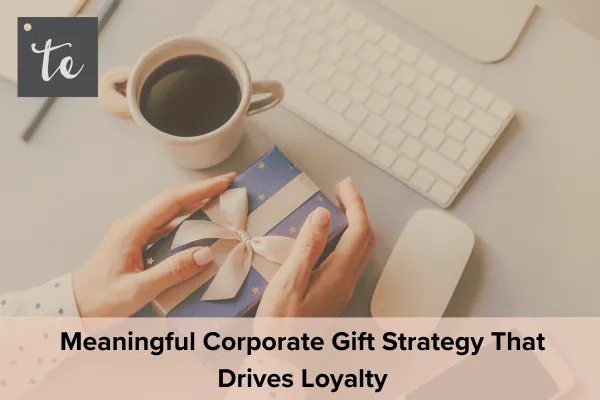
Meaningful Corporate Gift Strategy That Drives Loyalty
There’s a quiet power in a gift that goes deeper than surface-level appreciation. It’s not flashy. It doesn’t scream “look at me.” But it sticks with you because it makes you feel like you belong.
That’s the kind of gift that builds emotional loyalty. And that’s the kind of gift that creates business magic. When it comes to business gifting, these are the moments that matter the most.
A story I once read about Disney’s Bob Iger (The Ride of a Lifetime: Lessons Learned from 15 Years as CEO of the Walt Disney Company, by Robert Iger) and the iconic Pixar lamp perfectly captures this idea. And honestly, it’s one of my favorite stories. Something about it is touching. Maybe it’s the fact that it was definitely an emotional move for such big companies. Whatever it is that makes this story stick for me, I can tell you that it was an unintentional corporate gifting strategy that worked.
When Disney acquired Pixar, the move was going to require some relationship repair. The two companies had a rocky history. Years earlier, tension had grown between Pixar and Disney leadership, straining their creative collaboration and putting future partnerships at risk. The creative forces were in a battle for the future of animation with each side believing they were superior. When Bob Iger began to lead the acquisition, he knew that in order for this thing to work, there was a lot of trust that needed mending at all levels between the companies.
When the deal was finally approved, the Pixar team realized a typical merger handshake wasn’t going to communicate their commitment to the partnership. They wanted to mark this new beginning in a meaningful way, something that acknowledged their shared past while signaling a more hopeful future. They landed on a symbolic gesture that, to me, is a masterclass in relationship-based gifting.. Something that had become a piece of Pixar’s culture.
On the day of the signing, the team welcomed Iger to their office and presented him with the iconic desk lamp. Yes, THE Pixar lamp. The one that bounces across the screen in every animated intro. That lamp was a nod to their roots. And in presenting a physical version of it to Iger, they were also presenting him with an invitation and open arms. It was a gesture that said, “We welcome you, and the rest of your Disney team, to the family.”
It was a relationship move designed to forge a deep emotional connection, rebuild trust and create a lasting sense of shared identity. A perfect example of how strategic corporate gifts can do far more than check a box.
So, what did Iger do? He chose to bring it back to the Disney creative offices and give it a place of importance -- right inside the also iconic Cinderella Castle. He honored the gift, and in doing so, honored the relationship.
This was a declaration of shared values and mutual respect. And it was a sign of how the two halves wanted to operate in the future.
That’s what a relationship-related gift looks like. Imagine how you could put something like this to use this quarter. Is there some type of corporate gifting that could show your employees they matter by helping them understand just how much they are part of your brand story? And this time of year, when companies are searching for thoughtful business gift ideas for the holidays or New Year, it’s the perfect moment to rethink how you give corporate gifts.
What Is a Relationship-Related Gift?
This is one of The Expressory’s Six Strategic Storylines™ that we use to design meaningful business gifts that have emotional resonance.
A relationship-related gift is about giving someone a symbol of what it means to be part of your world.
It’s meaningful because it reflects your history, your culture and the emotional thread that connects your community.
Think about the companies you know that have some iconic “thing”. Maybe it’s a signature accessory they all wear, a quirky phrase or an exclusive notebook that only team members or clients receive. Giving that item to someone outside the circle is a powerful way of saying, “You belong here.”
These are the gifts that spark stories. The ones people hold onto. The ones that say, “You’re not just appreciated. You’re included.”
Does your company have any kind of tradition or item that is a reflection of who you are? Would someone recognize an item as belonging to people associated with your company? Think about how you might use that to create relationship touchpoints that mean something to the recipient.
Why These Gifts Create Real Connection
Relationship-related gifting taps into the human need for belonging. And if there’s one thing the modern business world is lacking, it’s authentic, meaningful relationships.
Our research shows that while most organizations understand trust is critical, fewer than half have a formal corporate gifting strategy designed to actually build it.That’s a problem. Especially since digital overload and shallow outreach are leaving clients and employees feeling more like data points than people.
Here’s where this strategy shines. When someone receives a gift that clearly signals, “You’re one of us,” it checks the three boxes identified in the psychology of meaningful relationships:
Felt Understanding – You see who they are.
Validation – You reflect what matters to them.
Care – You made the effort to show it.
These are the gifts that spark what is called emotional loyalty. It’s what makes people stick around not because they have no choice, but because they want to.
The Perfect Timing for This Kind of Gift? The New Year.
Imagine a scenario where you might send a package of appreciation that looks like this:
Your client, referral partner or employee opens a package the first week after coming back to the office in the new year. Inside is something uniquely yours. A symbol of your brand (but not branded), your team, your values. And a note that says something like:
“Thank you for being part of our family. Your presence means more than you know, and we’re so glad to start another year with you by our side.”
Now, that’s a message that gets your attention.
Starting the year by reinforcing a sense of belonging can be more powerful than any resolution. It reminds people of who they’re connected to, and why it matters.
Tips to Make This Strategy Work for You
Here’s how to make sure your relationship-related gift delivers on its potential:
Choose Something Symbolic
Pick an item that represents your brand’s heart, not just your logo. It should have meaning behind it, something insiders recognize. And listen, if you don’t have anything like this, maybe now would be a great time to have the team think about something that is representative of who you are.
Add the Story
Don’t just send the thing. Tell them why it matters and what it means that they’re receiving it.
Tie It to a Transition
Moments of change (like a new year, a new hire or a partnership milestone) are great times to deliver a gift that welcomes people into the fold. Tapping into a transitional time will add an additional layer to the power of your relationship-based gifting. See our blog on transitional storylines.
Keep It On-Brand
If your culture is fun and quirky, your gift should be too. If you’re thoughtful and polished, reflect that in your choices.
Think Beyond Clients
This works beautifully for team members, vendors or strategic partners. Anyone you want to deepen a relationship with.
Want to Try It? Ask Yourself These 5 Questions First
Want to give this a try? That’s great. Here are some questions to consider to ensure you are on the right track.
What item best represents our brand’s identity or culture?
Look for something that your team already connects with. What has a bit of legacy or inside meaning?What message would make someone feel “invited in”?
Think beyond appreciation. What words would signal belonging?Who in our orbit would benefit from feeling more included?
Consider clients, partners, new hires or even past prospects who’ve been on the fence.How can this gift support our larger goals for loyalty and connection?
Make sure the gift aligns with your engagement strategy, not just your budget.What would make this gift unforgettable?
Think of one detail that would surprise or delight the recipient.
In a business world that’s increasingly automated, gifts that create a sense of belonging or help people feel a part of something bigger stand out more than ever.
Whether it’s a hoodie your team wears like a badge of honor or a quirky object that only insiders understand, those small, thoughtful signals have the power to create major loyalty.
If you need help uncovering what your “Pixar lamp” might be, that’s exactly what The Expressory does best.
Let’s make this the year your gifts tell a story worth remembering.
Frequently Asked Questions
What is relationship-related corporate gifting?
Relationship-related corporate gifting is a strategic approach that focuses on giving symbolic items that represent your company's culture, values or identity. Unlike traditional branded merchandise, these gifts create a sense of belonging by inviting recipients into your community. They signal "you're one of us" rather than just "thank you."
When is the best time to give relationship-based gifts?
The most powerful time can really be any time. Relationship-based gifts work especially well in the moments that you really need to make people feel like they belong, though.
How is this different from regular corporate gifting?
Traditional corporate gifts focus on appreciation or brand visibility. Relationship-based gifts go deeper, they represent membership in your community. Think of the difference between receiving a branded pen versus receiving the iconic item that everyone on the team uses or cherishes.
What if my company doesn't have a signature item or tradition?
This is a perfect opportunity to create one! Gather your team and identify what represents your culture. It could be something you already use internally, a symbol from your origin story or a new tradition you consciously establish. The meaning matters more than the object itself.
How do relationship-based gifts build client loyalty?
These gifts tap into the human need for belonging by creating emotional connection. When recipients feel understood, validated and cared for through a meaningful gesture, they develop emotional loyalty,the kind that makes people stay because they want to, not because they have to.