
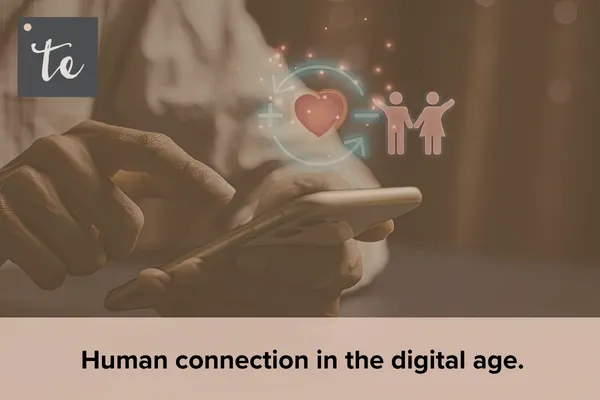
Human Connection in the Digital Age
There is a quiet tension running through most professional relationships right now.
We are, by every measurable standard, more connected than we have ever been. Email, messaging platforms, video calls, social media, automated digital touchpoints; the infrastructure of modern, digital communication in the workplace is vast and immediate. A message can reach someone in seconds. A broadcast can reach thousands at once.
And yet, something is missing for a lot of people.
According to the Cigna Group's Loneliness in America survey, more than 57% of Americans report feeling lonely. And interestingly, the generations who are the most digitally connected are also among the loneliest. That is not a personal wellness statistic. That is a reflection of something happening at a systemic level in how we relate to one another, including in business.
Digital communication hasn’t failed us. But it has changed us. And if you’re someone who builds relationships for a living, with clients, partners, or the people who trust you with meaningful things, then understanding that shift matters more than ever. It really is the foundation for everything that follows.
What Gets Lost in the Digital Layer
Speed is genuinely valuable. The ability to respond quickly, share information clearly and stay in contact across distance has transformed what professional service looks like. No one would argue otherwise.
But speed and depth are not the same thing. And that distinction matters more than we realize.
Research from Durham University found that employees are most satisfied with face-to-face interaction and that increased reliance on text-based communication (emails and messaging platforms) correlated with lower psychological well-being and reduced feelings of social connection. The same dynamic follows us into every professional relationship we navigate.
When most interactions happen through a screen, the person on the other side can begin to feel like a name in an inbox rather than someone with a life, a set of pressures and a story unfolding in real time. The relationship exists on paper with a very thin emotional texture.
When communication becomes more compressed, with speed often taking priority over depth, colleagues and clients can start to feel more like usernames or email addresses than people. Over time, that distance makes it harder to build strong relationships, and a lack of personal rapport erodes trust.
That erosion happens gradually, in the accumulation of interactions that were efficient but not felt.
Why Human Connection Still Defines Loyalty
Clients don’t usually leave because of one obvious failure. More often, the relationship gradually shifts until it starts to feel transactional. They no longer feel like a person being supported, but more like a file being managed. And once that feeling sets in, it quietly opens the door for them to start looking for something else.
This is what we refer to as relationship drift. And in a landscape where digital communication is the default, drift can happen even in relationships you believe are strong.
The antidote is not less technology. It is more intentionality.
Human connection requires felt understanding. It’s not enough for someone to be told you’re paying attention. They need to sense it in how you show up and how you respond to what they’re navigating. It requires moments that communicate care beyond the transaction, and those moments happen when someone is intentional enough to create them.
This is why personal touchpoints in the digital age carry a different kind of weight than they once did. When everyone else defaults to an automated message or a scheduled broadcast, a gesture that is clearly human and clearly personal stands out because it is rare.
Studies identified loneliness as a defining challenge of our time, noting that 1 in 6 people worldwide are affected by it with direct consequences for health and well-being. The professional implications of that reality are worth taking seriously. The people you serve are not immune to it.
The Challenge of Staying Present
One of the most common challenges of human interaction in a digital environment is simply the pressure to keep up. Inboxes demand responses. Platforms reward frequency. The volume of communication is high, but depth tends to suffer in the current.
This often creates a pattern that we see impact retention numbers. Professionals stay visible without staying present. They send updates but do not check in on what matters. They follow a contact on LinkedIn but do not reach out when something relevant changes in that person's world. They communicate, technically, but the relationship fades because it is not anchored in any kind of emotional depth.
Digital networking strategies can help with reach. They can help you remain on a contact's radar, share content consistently and build an online presence that signals credibility. Those things are worth doing.
But they are not substitutes for the kind of intentional, personal outreach that reinforces that you see someone as more than a contact. The difference between visibility and presence is the difference between being remembered and being trusted.
What Intentional Connection Actually Looks Like
At The Expressory, we define gifting as any intentional act of giving that shows you care, with no expectation of return. That definition extends well beyond objects. It means that your time and presence are also gifts. It includes the phone call you did not have to make. The article you sent because it reminded you of a conversation. The card that arrived at a moment of transition, not because it was on a calendar but because someone was paying attention.
These gestures are, at their core, acts of human connection.
They communicate three things that social psychology consistently identifies as the foundation of felt relationships:
That you understand what someone is navigating
That their experience matters to you
That you are willing to show up for them without being prompted by a transaction.
This is what sustains loyalty in a digital age. Not automation. Not volume. Intentionality.
A handwritten note carries weight precisely because it is inefficient. Physical mail stands out because it requires effort.
Research has shown that seeking help and guidance (and the act of giving it) correlates with stronger feelings of social connectedness. When you proactively offer something useful, relevant or kind, you are participating in that dynamic. You are reinforcing that the relationship is real, not just functional.
A Different Way to Think About Digital Communication
The goal is to use digital communication in the service of something deeper.
Digital tools are extraordinary for maintaining contact, sharing information and staying responsive. They become a problem when they become a substitute for presence, when the efficiency of a broadcast replaces the intention of a personal message.
The professionals who build the strongest client relationships in a digital age are not the ones who communicate the most. They are the ones who communicate with the clearest sense of why they are reaching out, who they are reaching out to and what that person specifically needs to hear right now.
The Shift Worth Making
There is a version of staying connected that feels like noise, a flood of touchpoints that signal activity without conveying care. And there is a version that feels like presence, a consistent demonstration that you are engaged in the lives of the people who trust you.
In the digital age, the most powerful thing a professional can offer is evidence that a real person is on the other side of the relationship. Someone who remembers. Someone who notices. Someone who chooses to show up even when there is no meeting scheduled, no renewal approaching and no obvious business reason to do so.
That is what builds relational equity that lasts. And that is what keeps relationships from drifting in a world that makes drifting very easy.
Five Questions to Reflect On
1 - Am I using digital communication to stay efficient, or am I using it as a reason to avoid more personal forms of connection?
Think honestly about the last ten touchpoints you had with a key client or relationship. How many were automated, scheduled or broadcast to a list? How many were clearly, unmistakably personal? The ratio tells you more about your relational presence than any metric will.
2- When did I last reach out to a key relationship in a way that was clearly personal rather than automated or scheduled?
Not a newsletter. Not a check-in call prompted by a renewal date. A moment where you noticed something about that person's life and chose to acknowledge it without any business reason to do so. If you have to think hard to remember, that is worth paying attention to.
3- Do the people I serve feel genuinely seen between meetings or only when there is a formal reason to connect?
Clients rarely articulate this feeling out loud. They simply begin to experience the relationship as transactional rather than partnership-based. By the time that shift is visible, the relational equity has already been quietly eroding for a while.
4- Where in my current communication approach might relationship drift be happening?
Drift does not announce itself. It accumulates in the stretches of silence between formal touchpoints, in the interactions that were professional but not personal, in the relationships you assumed were strong simply because nothing had gone wrong. Identify the gaps before someone else fills them.
5- What one intentional act of human connection could I create this week for someone who would not expect it?
Not a campaign. Not a strategy. One person, one gesture, one clear signal that you are paying attention to their life beyond the scope of what they hired you to do. That is where loyalty is built, quietly, consistently, one intentional moment at a time.
If you would like support building a more intentional, relationship-centered engagement strategy, one that protects the relationships you have already worked to earn, we would be glad to talk through what that could look like for your firm.
You are always welcome to join one of our community Q&A sessions or schedule a one-on-one conversation to explore how human connection can become a deliberate, repeatable part of how you do business.
Frequently Asked Questions
If I’m already using automated tools to stay in touch, isn't that enough to prevent "relationship drift"?
Automation is excellent for visibility, but it rarely achieves presence. It shows how important real personal connections in the digital age are. A newsletter keeps your name in an inbox, but it doesn't make a client feel seen. To prevent drift, you must layer in "unscalable" moments (like a quick voice note or a physical card) that prove a human being is actually thinking about them, not just a CRM trigger.
How do I find time for "intentional connection" when my schedule is already full?
Intentionality requires observation rather than hours. Use the "Three-Minute Rule". If you see an article, a post or a memory that reminds you of a client, send it immediately with a one-sentence note. These micro-gestures take less time than a formal meeting but carry more emotional weight because they are unsolicited.
Does "human connection" mean I have to share my personal life with clients?
Not necessarily. Human connection is less about "oversharing" and more about "other-awareness." It’s about acknowledging their milestones, their pressures and their interests. You can maintain professional boundaries while still being warm, empathetic and observant of the person behind the professional title.
How can I make digital platforms like LinkedIn or email feel more "human"?
Move away from the "broadcast" mindset. Instead of just "liking" a post, send a private message mentioning a specific point they made. Instead of a standard email, try a 30-second video message using tools like Loom or Vidyard. Seeing your face and hearing your tone of voice instantly breaks through the "digital layer" that causes emotional thinning.
Is there a specific frequency for these intentional touchpoints?
There is no single “magic number,” but there are clear, practical guidelines that work. For clients (and team members), we recommend at least four meaningful, non-digital touchpoints per year. For prospects and referral partners, a thoughtful touchpoint approximately every seven weeks helps maintain presence without feeling overwhelming. The key is consistency and relevance, ensuring each interaction feels intentional rather than routine.