
Take Control of Your Biz-Dev Efforts with Our
Dream 25 System
Drive Growth with Our Proven Approach to Finding and Nurturing Your Ideal Clients.
The Expressory is a STRATEGIC ENGAGEMENT AGENCY that helps you build the relationships that GROW YOUR BUSINESS

Learn More About the Dream 25 System
Most business owners rely heavily on referrals to generate new business. And for good reason – referrals are a great way to get new clients. But, referrals should not replace a holistic biz-dev strategy. If you are relying on referrals for the majority of your new business, your pipeline is ultimately in the hands of someone else. And that puts YOUR business at risk.
How do you take control of your biz-dev efforts?
What is the Dream 25 System?
Learn how our Dream 25 system helps you take control of your biz-dev pipeline, revolutionize your business relationships, and create connections that help you get – and retain – your ideal clients.

AUTHENTICALLY ENGAGING.
POSITIVELY ALTERING.
SIMPLY REMARKABLE.
Beyond gifts, we design and deliver touchpoints that make people feel seen, cared for, valued and appreciated.

Our engagement strategies ensure you stay top of mind with the people important to your business’s growth and success.
Journey Through Our Dream 25 Blog Series
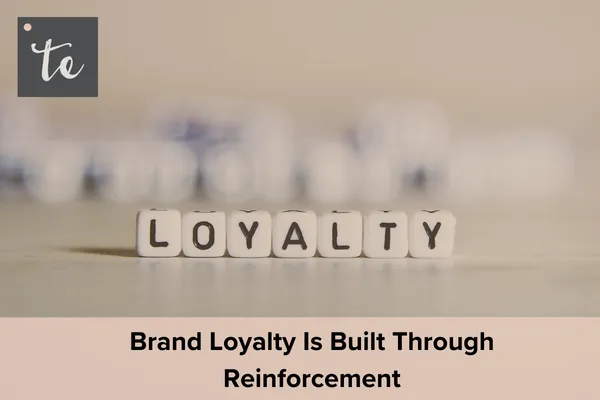
Brand Loyalty Is Built Through Reinforcement
Picture this: Two companies deliver nearly identical products at similar price points. Both have competent teams. Both meet expectations. But one brand keeps its clients for years, earns referrals without asking and rarely competes on price. The other constantly works to replace churn.
The difference isn’t the product. It’s loyalty.
In today’s environment, brand loyalty in marketing is no longer a nice-to-have metric tucked inside retention dashboards. It is a leading indicator of revenue stability, expansion potential and long-term relational equity.
Yet many organizations still misunderstand what actually creates it. They assume loyalty is built through satisfaction. Through points programs. Through frequency of communication.
But loyalty doesn’t form through activity alone. It forms through emotional reinforcement. And that’s where most businesses have a blind spot.
What’s Really Driving Brand Loyalty
At its core, loyalty is not primarily behavioral. It is psychological. The field of brand psychology has consistently shown that people remain attached to brands that reinforce identity, reduce perceived risk and create emotional visibility.
In other words: Customers stay where they feel seen. Partners stay where they feel valued. Clients stay where the relationship feels reinforced.
This is why two companies with similar performance can experience dramatically different retention curves. One delivers outcomes. The other delivers outcomes and attachment.
Only one builds durable loyalty.
The Hidden Risk: Relationship Drift
Most organizations do not actively damage loyalty. They simply allow it to erode. In stable relationships, the greatest threat is rarely performance failure. It is emotional neutrality, what we often call relationship drift. This is where businesses unintentionally create revenue risk:
Communication becomes purely transactional
Appreciation becomes sporadic or reactive
High-value clients become relationally invisible rather than intentionally reinforced
Touchpoints focus on delivery, not reinforcement
Over time, relational equity weakens. And when competitors appear, the relationship is easier to disrupt than leadership expects.
This is why the benefits of brand loyalty extend far beyond repeat purchases. Loyalty acts as insulation against competitive pressure and pricing sensitivity. But only when it is intentionally reinforced.
Why Traditional Loyalty Efforts Fall Short
Many teams believe they already have strong brand loyalty strategies in place. They point to:
Rewards programs
Customer satisfaction scores
Regular account check-ins
Automated nurture sequences
These activities create engagement. And engagement matters. Frequency matters. But engagement and frequency for the sake of checking a box do not automatically create emotional stickiness.
The organizations seeing the strongest long-term retention curves are doing something different: They are operationalizing care. They are embedding proactive appreciation into their client experience. They are treating loyalty as infrastructure, not sentiment.
The Shift: From Customer Management to Loyalty Reinforcement
If leadership teams want to increase brand loyalty, the focus must move beyond satisfaction metrics toward emotional signals. That shift includes:
From reactive to proactive
Waiting until renewal conversations to reinforce value is too late. Loyalty is reinforced through consistent action.
From transactional touchpoints to identity reinforcement
The most effective gestures reinforce the client’s identity as a valued partner, not just an account.
From random acts of appreciation to systemized care
Ongoing consistency builds relational equity. Sporadic gestures create momentary goodwill but not durable attachment.
At The Expressory, we often see that once organizations embed proactive care into their operating rhythm, measurable signals shift quickly:
Response rates increase
Partnership language strengthens
Emotional temperature visibly warms
Referral behavior improves
In each case, the product remains consistent. What changes is the reinforcement of the relationship itself.
Why This Matters More in Uncertain Markets
In uncertain economic conditions, loyalty becomes even more strategic. When budgets tighten and scrutiny increases, clients rarely leave first because of performance gaps. They leave when the relationship feels interchangeable.
This is the risk many leadership teams underestimate. Revenue rarely disappears suddenly. It drifts.
Organizations that understand brand loyalty and customer loyalty as leading indicators, not lagging outcomes, are better positioned to protect revenue already earned.
Because retention is emotional before it is financial.
Five Questions Every Business Leader Should Ask Now
If loyalty feels harder to maintain than it should be, it may be time to examine how intentionally your organization reinforces relationships.
Consider:
Are we reinforcing client value only at renewal moments?
- If loyalty conversations start late in the cycle, emotional attachment may already be weakening.
Where might relationship drift be occurring?
- Look for high-value accounts receiving only transactional communication.
Do we have a proactive appreciation infrastructure or random acts of care?
- Consistency, not intensity, builds relational equity.
What early loyalty signals are we actually measuring?
- Response language, engagement warmth and partnership language often move before revenue metrics.
Are we treating loyalty as sentiment or as revenue protection?
- The organizations that win operationalize care.
Businesses rarely lose clients overnight. They lose them gradually and often invisibly until it shows up in the numbers. The companies that outperform are reinforcing relationships intentionally, consistently and strategically.
Loyalty is built through structured reinforcement, measured through early emotional signals and protected long before churn appears in a dashboard.
At The Expressory, we help businesses operationalize loyalty so it isn’t accidental. We turn care into infrastructure, reinforce partnership identity and protect the revenue you’ve already worked hard to earn.
If you’re ready to explore how intentional loyalty reinforcement could strengthen your retention strategy, join one of our upcoming community Q&As or schedule a call to examine where relational equity may be at risk inside your organization.
Because in uncertain markets, loyalty isn’t soft. It’s strategic.
Frequently Asked Questions
What is the concept of brand loyalty?
At its core, brand loyalty is the emotional and behavioral commitment a customer shows toward a company over time. It goes beyond repeat purchases and reflects trust, preference and attachment. In modern brand loyalty in marketing, the concept centers on reinforcing emotional connection so customers continue choosing the brand even when alternatives are available.
What are the 5 pillars of brand loyalty?
While models vary, the most effective brand loyalty strategies typically reinforce five core pillars:
Trust and reliability: consistent delivery builds confidence
Emotional connection: customers feel seen and valued
Consistent experience: predictable, high-quality interactions, not just transactional
Proactive appreciation: intentional reinforcement of the relationship
Perceived partnership value: the shift from vendor to partner
Organizations that strengthen these areas tend to see the strongest benefits of brand loyalty, including higher retention, increased referrals and reduced price sensitivity.
What are the two types of brand loyalty?
Experts typically distinguish between two primary forms of brand loyalty and customer loyalty:
Behavioral loyalty: When customers repeatedly purchase out of habit, convenience or switching friction.
Emotional loyalty: When customers feel genuine attachment, trust and preference toward the brand.
From a brand psychology perspective, emotional loyalty is significantly more durable. Companies that want to increase brand loyalty focus not just on repeat behavior, but on reinforcing emotional connection and relational equity over time.


Talk to one of our experience managers to find out how our done-for-you, end-to-end service, will handle all the fine details of your personalized touchpoints, so you (and your team) can stay focused on your core business and still ‘wow’ and show your clients, prospects, team and strategic partners that you care.
Dive Deeper with Our Resources

Creating Emotional Loyalty
Unlock the power of emotionally loyal connections to grow your business and foster lasting relationships.

Listen to How Strategic Engagement Makes You an Easy Yes
Join us as we delve into the Dream 25 strategy, sharing insights and stories that will transform your business approach.
Join our Monthly Q&A Session
Each month, we uncover how to give strategically & drive revenue so you can identify, close, and keep your best clients.
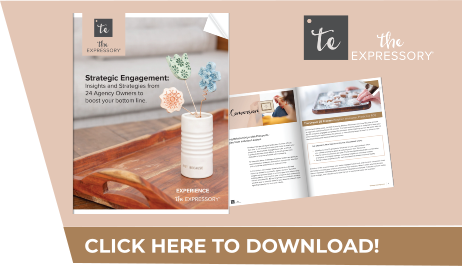
Need a bit
more inspiration?
Download our FREE ebook for strategic engagement examples that you can apply TODAY!
What Our Clients Are Saying...

“I can't tell you the number of times that the mailing of one of those packages has put someone on my calendar to reconnect with them.”
Shawndel Spader
Spader Group

Stephan Woessner
Predictive ROI
“I think you’ll be very pleasantly surprised, just like I was in how easy the process is. Why did we not do this years ago? Huge missed opportunity! I encourage you to no longer miss those opportunities and have the conversation with Jamie. I think you will be very pleased that you did."

Theresa Wilmot
Wilmot Designs
"Working with The Expressory for gifting is the perfect blend of giving a gift that is truly of your heart with the message you want delivered but the convenience and ease of having it done for you! The best!!"
What Others Are Experiencing
“Jamie and The Expressory are one of my most powerful assets as a small business owner. Client engagement beyond our direct service offering was a constant struggle in the past and we were failing to help show our appreciation for the amazing ways our clients support us, until I met Jamie and signed up for her services. Now my clients regularly tell me how much they love our beautiful and thoughtful cards. I have actually had stronger renewals from clients because they were touched by how much we actually cared about their lives outside of our studio. The Expressory is able to deliver on how we feel about our clients in a seamless and automated way that makes my team and business look great!”
Kevin Baker
Fitness Together
“Jamie and The Expressory are one of my most powerful assets as a small business owner. Client engagement beyond our direct service offering was a constant struggle in the past and we were failing to help show our appreciation for the amazing ways our clients support us, until I met Jamie and signed up for her services. Now my clients regularly tell me how much they love our beautiful and thoughtful cards. I have actually had stronger renewals from clients because they were touched by how much we actually cared about their lives outside of our studio. The Expressory is able to deliver on how we feel about our clients in a seamless and automated way that makes my team and business look great!”
Kevin Baker
Fitness Together
Ready to Take Control of Your Biz-Dev?
Join the Dream 25 Program and start building relationships that matter.
Experience the power of personalized engagement and see how it can transform your business.
Address:
1500 S. Sylvania Ave #106
Sturtevant WI 53177
Phone:
414.243.8971