
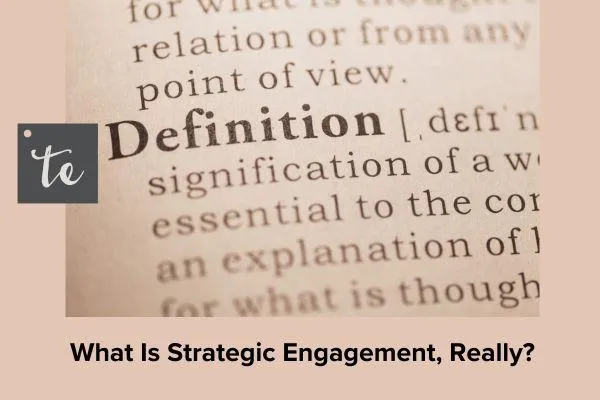
What Is Strategic Engagement, Really?
As we worked through our latest research, one thing became clear. There were a lot of similar words and phrases used to describe strategic engagement.
We noticed references to “engagement,” “connection,” “care,” “trust,” and “relationship” in the results. And we realized that it might be confusing to figure out if they’re interchangeable or how they relate to the overall strategy.
Because if we’re not aligned on what these terms actually mean, we can’t build a strategy that truly works.
So today, we’re hitting pause to unpack what strategic engagement really is, and why defining it clearly is the first step toward better results.
Why Definitions Matter
Let’s say you tell your team, “We need to engage our clients more.” That’s a solid directive. Unless one person thinks it means posting on social media, another thinks it’s about sending birthday cards and another starts planning a client dinner.
None of these are wrong, but without a shared definition of “engagement,” your efforts can feel scattered and reactive. You’re doing stuff, but it’s not strategic.
That’s why clarity matters. And it’s why we’re bringing it back to the basics, starting with the phrase we build everything on: Strategic Engagement.
So, What Is Strategic Engagement?
Strategic engagement is an intentional, relationship-first approach to doing business. It’s the planned, repeatable system behind how you show care, build trust and create loyalty with the people who matter most. Your clients, prospects, team members, partners.
It’s not a campaign. It’s a mindset. A way of building business around real human relationships.
And here’s what sets it apart. At The Expressory, we ground this work in social psychology. Our strategies are based on what actually drives relationship building. Because if you want to build meaningful, lasting relationships, you have to understand how people relate on an emotional level.
How Do These Words Actually Work Together?
When we reviewed the findings from our research, we noticed that we hadn’t been consistent in the terminology we used. However, they are words and phrases that are very common in the everyday conversations we have with leaders.
They are:
Connection
Care
Trust
Relationship
And while everyone agreed they were important, we realized that if we’re going to share why the strategic engagement results matter, then we’re going to need to answer:
How do these actually relate to each other?
Are they the same thing? Is it a connection or a relationship you need?
Do you build trust first or show care?
Where does engagement fit in?
These are valid questions about the interconnection of this terminology. And we want to clear up what that looks like so you can see the emotional journey behind every strong engagement strategy.
The Emotional Progression of Strategic Engagement
At The Expressory, we see these terms as part of a natural flow. One that mirrors how real human relationships develop. Here's how they work together:
1. Connection
This is your starting point. It’s awareness. A handshake, a follow, a name on your list. It’s important, but it’s only the beginning.
2. Care
This is where it starts to feel personal. You show someone they matter. That you listened. That they’re not just a number. When care is shown, it builds emotional relevance.
3. Trust
Care, repeated over time, becomes trust. And in today’s world, trust isn’t automatic. It has to be earned. Trust is what allows people to open up, engage more deeply and consider real commitment.
4. Relationship
This is where strategic engagement reaches its full potential. A relationship is built on trust. It’s built when you show care, consistent understanding and validation. It’s the space where loyalty is formed, referrals are sparked and your impact grows.
So, when we talk about strategic engagement, it’s not about choosing between these words. It’s about understanding how they all work together.
You don’t need to guess which one matters most. You need a plan that weaves them all together, intentionally and consistently, to build something that lasts.
Let’s Not Forget Gifting
One more word that came up repeatedly in our research, and deserves some special attention, is gifting.
It’s a term we’ve found is often misunderstood. When people hear “gifting,” they tend to picture presents, holiday gifts, company swag or something that feels, well, transactional.
But at The Expressory, gifting has a very different, and much deeper, meaning.
Gifting, to us, is any intentional act of giving that shows you care, with no expectation of return.
It’s not about impressing. It’s about nurturing a relationship by showing care.
That might be:
A handwritten note after a meaningful conversation
A curated article that solves a problem they’ve shared
A small item that reflects something personal you remembered
Gifting isn’t about flashy packages or perfect timing. It’s about making someone feel seen and valued. It’s the tangible expression of care that helps bridge the emotional distance we often feel in business relationships.
When done with intention, gifting becomes a vehicle for care, not commerce. It helps move someone from feeling like a transaction to feeling like part of a relationship. And in the progression of engagement we just outlined, connection → care → trust → relationship, gifting becomes one of your most powerful tools for showing care.
Bringing It All Together
So, when we talk about strategic engagement, it’s not about checking in occasionally or sending out mass emails with the right “tone.”
It’s about crafting an intentional, human-centered experience that leads someone from first connection to lasting loyalty.
It’s about understanding how connection, care, trust, relationship and gifting all work together, not as buzzwords, but as pieces of an emotional journey.
And when do you build your strategy around that journey?
You create something people remember.
You earn trust that lasts.
You build a business that grows by word-of-mouth, not just marketing.
Five Questions to Reflect On
Now that we’ve clarified what strategic engagement really means, let’s make it personal. Here are five questions to ask yourself (or your team) as you think about how this plays out in your business:
Are we focused more on transactions or on building real relationships?
Is your outreach driven by checkboxes, or by a desire to create lasting relationships?Do we have a system in place to show care consistently?
Or are you relying on good intentions and memory?How are we earning trust with our prospects and clients?
What actions are we taking regularly to show we’re dependable, thoughtful and human?Are we building toward long-term relationships or short-term wins?
Think about where you’re investing your time and energy. Is it sustainable? Is it strategic?Does everyone on our team understand what engagement means and how to do it well?
If your team isn’t aligned, chances are your efforts aren’t aligned either.
Strategic engagement isn’t just another marketing tactic, it’s the difference between being remembered and being replaced.
The future of business isn’t about automation. It’s about authenticity.
And it starts with how you engage.
If you’re ready to bring more clarity, more connection and a whole lot more care into your business strategy, we’re always here to help.
Join us at an upcoming Q&A to dig into this further, or schedule a one-on-one to start building your custom strategy.
Frequently Asked Questions
Why is strategic engagement important?
Strategic engagement is important because it turns relationship-building from a reactive effort into a very intentional one. So, instead of engaging only when there’s a need or a problem, strategic engagement helps you to create consistent moments of care that build trust over time. That trust is what leads to stronger relationships, lasting loyalty and sustainable growth.