
Take Control of Your Biz-Dev Efforts with Our
Dream 25 System
Drive Growth with Our Proven Approach to Finding and Nurturing Your Ideal Clients.
The Expressory is a STRATEGIC ENGAGEMENT AGENCY that helps you build the relationships that GROW YOUR BUSINESS


Learn More About the Dream 25 System
Most business owners rely heavily on referrals to generate new business. And for good reason – referrals are a great way to get new clients. But, referrals should not replace a holistic biz-dev strategy. If you are relying on referrals for the majority of your new business, your pipeline is ultimately in the hands of someone else. And that puts YOUR business at risk.
How do you take control of your biz-dev efforts?
What is the Dream 25 System?
Learn how our Dream 25 system helps you take control of your biz-dev pipeline, revolutionize your business relationships, and create connections that help you get – and retain – your ideal clients.

AUTHENTICALLY ENGAGING.
POSITIVELY ALTERING.
SIMPLY REMARKABLE.

Beyond gifts, we design and deliver touchpoints that make people feel seen, cared for, valued and appreciated.

Our engagement strategies ensure you stay top of mind with the people important to your business’s growth and success.
Journey Through Our Dream 25 Blog Series
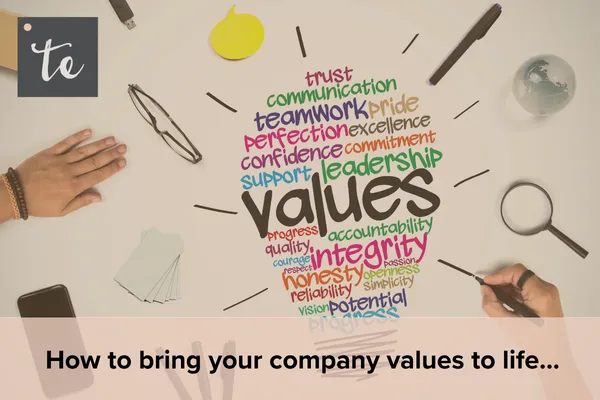
How to Bring Your Company Core Values to Life Beyond the Poster on the Wall
You have them. You probably spent real time on them. Maybe even brought in outside help. They are on your website, in your onboarding deck and, if your office has a lobby, there is a reasonable chance they are hanging in it.
And yet, according to Gallup, only 27% of U.S. employees strongly agree that they believe in their organization's values. Just 23% say they can apply them to their work every day. Leadership IQ found that only 13% of employees feel that everyone in their company is consistently living those values at all.
This is not a fringe problem. It is a near-universal one. And it raises an uncomfortable question for any leader who has invested in defining their company core values. What exactly did that investment buy?
The Poster Is Not the Problem
Let's be clear, the corporate values poster in your conference room is not the issue. The issue is when the poster becomes the finish line. When values are treated as a communications exercise, something to define, design and display, they almost inevitably become wallpaper. People walk past them without a thought. New hires see them in week one and rarely again. And slowly, the words that were supposed to anchor your culture begin to float.
The importance of corporate values has always been about operationalization. A value that is stated but not practiced is not a value, but a liability. It creates the kind of cynicism that is very difficult to walk back once it takes hold. The unspoken understanding among your team that what leadership says and what leadership does are two different things.
If your company core values are not shaping decisions, guiding recognition, informing how you hire or showing up in how you treat the people who matter most to your business, they are not functioning as values but rather décor.
Why the Gap Exists and Why It Persists
Most leaders know this. The problem is rarely awareness. It is execution.
Values are handed down, not built together: When a team has no voice in shaping the values they are expected to live by, those values feel like something that happened to them. Compliance, at best. Detachment, at worst.
There is no behavioral translation: Saying "we value integrity" is abstract. Defining what integrity looks like when a client pushes back, when a deadline is missed, when a colleague is struggling, that is where meaning is made.
Recognition is rewarding the wrong things: When results are celebrated and misaligned values based behaviors are left unaddressed, the message lands clearly. What gets recognized is what gets repeated.
Care is accidental: One of the quietest ways corporate culture and values erode is when the human side of the business (appreciation, acknowledgment, genuine presence in the lives of the people around you) is left to chance. Random acts of care unfortunately are only a suggestion of a culture of care.
What It Actually Takes
The shift from values as language to values as a lived experience requires a different kind of intentionality. Instead of more communication, it needs more structure.
Translate Every Value Into Behavior
For every value your company holds, the question to answer is: what does this look like on a Tuesday afternoon when things are hard? Preferably in observable, specific terms. What does "client-first" look like in a Monday morning meeting? What does "we take care of our people" look like when someone on the team is navigating something difficult at home?
Corporate values training that anchors language to real scenarios is the bridge between what you say and what your corporate culture and values actually become. Without it, values remain an idea. With it, they become a standard.
Extend Them Beyond the Internal Team
This is where most companies leave the most value on the table. Corporate culture and values work is almost always framed as an internal initiative. Onboarding programs, all-hands meetings, intranet pages.
But company core values become real when they show up in how you treat the people who matter most to your business, your clients, your partners, your referral sources.
At The Expressory, we work with companies on what we call strategic engagement. The intentional, systematized practice of expressing care for the relationships that drive your business. When your company core values include words like "partnership," "trust" or "care," those values have to extend beyond the internal team. They need to show up in how you acknowledge a client milestone, how you respond when a client's circumstances change, how you show up for the relationship when no one is asking you to.
That is the difference between a value that is stated and a value that builds relational equity. And that relational equity is what moves clients from satisfied to loyal and from loyal to advocates.
Make Leadership Accountability Visible
The most powerful cultural signal in any organization is what leadership does consistently. Only 26% of employees believe their CEO holds people accountable to the company's values, according to Leadership IQ. That number reflects a credibility gap that no corporate values poster can close.
When leaders reference values in real decisions and address it directly when behaviors fall short, they demonstrate that the values are not decorative. This is not about policing the team. It is about modeling for the team. When people see that your company core values actually shape how the business moves, they begin to move that way too.
Tie Recognition and Acknowledgment to the Values, Specifically
Recognition is one of the most underused tools in cultural reinforcement, but it only works when it is precise.
Recognition speaks to what someone did. It highlights a specific action, outcome or contribution. A team member who went out of their way for a client. Someone who handled a difficult situation with clarity. These moments matter because they show what the company values look like in motion.
Acknowledgment, on the other hand, speaks to who someone is being. It reflects qualities like presence, care, integrity or leadership, especially in moments that may not be tied to a measurable result.
Both play a different role, and both are necessary. When recognition is vague (“great work this quarter”), it loses its impact. When it is specific and tied to values, it reinforces behavior.
When acknowledgment is present, it deepens culture. It tells people they are seen not just for what they produce, but for how they show up.
Together, they turn abstract values into something people can actually experience and repeat.
Your Values Are Already Showing Up for Clients - The Question Is How
Here is something that rarely surfaces in corporate values training conversations. Your company core values are visible to your clients whether you have designed them to be or not.
When you follow through without being asked, when you acknowledge a client's challenge without prompting, when you show up for the relationship in a moment that has nothing to do with a deliverable, or when you do not, you are expressing your values. The question is whether that expression is intentional or accidental.
Companies that embed their company core values into their client relationships make the shift from vendor to partner. That shift is strategic.
Clients who experience care as a consistent, intentional part of how you operate demonstrate measurably different retention behavior. They stay. They refer. They advocate. They become the kind of relationships that protect your revenue before it is ever at risk.
This is what it looks like when corporate culture and values do the work they were designed to do across every relationship the organization holds.
Five Questions Every Business Leader Should Ask Now
Most leaders assume their company core values are doing more work than they actually are. These questions are designed to close the gap between that assumption and the reality your team and clients are experiencing.
If you stopped ten people on your team today and asked them to explain what one of your company core values looks like in their specific role, how many could answer?
They don’t need to recite it word for word. But can they explain it in practice, in the context of their actual work? If the answer is uncertain, your corporate values training has not gone deep enough and the behavioral translation work has not happened yet.
When did your clients last experience one of your company core values (not hear about them, but actually feel them)?
Your corporate culture and values should be visible in how you show up for clients, not just in how you describe your culture internally. The gap between those two things is where relationship drift begins.
Who owns the values and what does that ownership actually require of them on a weekly basis?
If the answer is "everyone," it is effectively no one. The best practices for embedding new cultural norms all point to the same conclusion: designated accountability drives adoption. Distributed intention does not.
When did leadership last make a visible decision because of the company core values and did the team know that was why?
Values demonstrated through real decisions carry more weight than values communicated through announcements. If your team cannot point to a recent example, the importance of corporate values is only stated but not yet felt.
Is care in your organization a system or a coincidence?
Appreciation, acknowledgment and genuine presence in the lives of the people around you are not soft add-ons. They are the infrastructure of corporate culture and values that actually retains people and earns loyalty. If care only happens when someone remembers to make it happen, it is an accident waiting to be interrupted rather than actual value.
If sitting with these questions surfaces more uncertainty than confidence, that is valuable information. It means there is a real opportunity to close the distance between the company core values you aspire to and the culture your people and clients are actually living inside.
Ready to close the gap between your stated values and the culture your clients and team are actually experiencing? Join us for our upcoming community Q&A session or schedule a one-on-one conversation to learn how strategic engagement helps businesses turn their values into a lived, relational practice.
FAQs - Frequently Asked Questions
Why do company core values often fail to stick?
Company core values often fail because they are treated as a one-time exercise instead of an ongoing practice. When values are only displayed on corporate values posters or mentioned during onboarding, they lack real application in daily decisions and behaviors. Without reinforcement, they become easy to ignore.
How can businesses make corporate values actionable?
To make corporate culture and values actionable, companies need to translate each value into specific, observable behaviors. For example, instead of simply stating “integrity,” define how it should show up in client interactions, team communication and decision-making during challenging situations.
What is the role of leadership in reinforcing company values?
Leadership plays a critical role by consistently modeling corporate values in real decisions and holding teams accountable. When leaders visibly act on company values, it signals to employees that those values are not optional but essential to how the business operates.
How do company values impact client relationships?
Company values shape how businesses interact with clients, partners and referral sources. When values like trust, care and partnership are consistently demonstrated, they help build stronger relationships, increase retention and turn clients into long-term advocates.
What are best practices for embedding new cultural norms?
Best practices include consistent corporate values training, structured engagement systems, tying recognition to values-based behaviors and tracking meaningful touchpoints. Embedding values requires intentional systems, not just communication, to ensure they are lived across the organization.


Talk to one of our experience managers to find out how our done-for-you, end-to-end service, will handle all the fine details of your personalized touchpoints, so you (and your team) can stay focused on your core business and still ‘wow’ and show your clients, prospects, team and strategic partners that you care.
Dive Deeper with Our Resources

Creating Emotional Loyalty
Unlock the power of emotionally loyal connections to grow your business and foster lasting relationships.

Listen to How Strategic Engagement Makes You an Easy Yes
Join us as we delve into the Dream 25 strategy, sharing insights and stories that will transform your business approach.
Join our Monthly Q&A Session
Each month, we uncover how to give strategically & drive revenue so you can identify, close, and keep your best clients.

Need a bit
more inspiration?
Download our FREE ebook for strategic engagement examples that you can apply TODAY!
What Our Clients Are Saying...

“I can't tell you the number of times that the mailing of one of those packages has put someone on my calendar to reconnect with them.”
Shawndel Spader
Spader Group

Stephan Woessner
Predictive ROI
“I think you’ll be very pleasantly surprised, just like I was in how easy the process is. Why did we not do this years ago? Huge missed opportunity! I encourage you to no longer miss those opportunities and have the conversation with Jamie. I think you will be very pleased that you did."

Theresa Wilmot
Wilmot Designs
"Working with The Expressory for gifting is the perfect blend of giving a gift that is truly of your heart with the message you want delivered but the convenience and ease of having it done for you! The best!!"
What Others Are Experiencing
“Jamie and The Expressory are one of my most powerful assets as a small business owner. Client engagement beyond our direct service offering was a constant struggle in the past and we were failing to help show our appreciation for the amazing ways our clients support us, until I met Jamie and signed up for her services. Now my clients regularly tell me how much they love our beautiful and thoughtful cards. I have actually had stronger renewals from clients because they were touched by how much we actually cared about their lives outside of our studio. The Expressory is able to deliver on how we feel about our clients in a seamless and automated way that makes my team and business look great!”
Kevin Baker
Fitness Together
“Jamie and The Expressory are one of my most powerful assets as a small business owner. Client engagement beyond our direct service offering was a constant struggle in the past and we were failing to help show our appreciation for the amazing ways our clients support us, until I met Jamie and signed up for her services. Now my clients regularly tell me how much they love our beautiful and thoughtful cards. I have actually had stronger renewals from clients because they were touched by how much we actually cared about their lives outside of our studio. The Expressory is able to deliver on how we feel about our clients in a seamless and automated way that makes my team and business look great!”
Kevin Baker
Fitness Together
Ready to Take Control of Your Biz-Dev?
Join the Dream 25 Program and start building relationships that matter.
Experience the power of personalized engagement and see how it can transform your business.
Address:
1500 S. Sylvania Ave #106
Sturtevant WI 53177
Phone:
414.243.8971