
Take Control of Your Biz-Dev Efforts with Our
Dream 25 System
Drive Growth with Our Proven Approach to Finding and Nurturing Your Ideal Clients.
The Expressory is a STRATEGIC ENGAGEMENT AGENCY that helps you build the relationships that GROW YOUR BUSINESS

Learn More About the Dream 25 System
Most business owners rely heavily on referrals to generate new business. And for good reason – referrals are a great way to get new clients. But, referrals should not replace a holistic biz-dev strategy. If you are relying on referrals for the majority of your new business, your pipeline is ultimately in the hands of someone else. And that puts YOUR business at risk.
How do you take control of your biz-dev efforts?
What is the Dream 25 System?
Learn how our Dream 25 system helps you take control of your biz-dev pipeline, revolutionize your business relationships, and create connections that help you get – and retain – your ideal clients.

AUTHENTICALLY ENGAGING.
POSITIVELY ALTERING.
SIMPLY REMARKABLE.

Beyond gifts, we design and deliver touchpoints that make people feel seen, cared for, valued and appreciated.

Our engagement strategies ensure you stay top of mind with the people important to your business’s growth and success.
Journey Through Our Dream 25 Blog Series
From Listening to Action: Using Cues to Improve the Client Experience
Over the past few posts, we’ve been digging into a skill that is a powerful asset in today’s digital first environment – strategic listening. We’ve talked about how easy it is to miss the moments that matter and how tuning in to everyday conversations can uncover emotional cues that strengthen your relationships and drive business growth.
By now, you know how to spot those moments, like when a client casually mentions a daughter’s new business, a long-overdue vacation or the stress of college decisions. These little details, when acknowledged, can become meaningful points to strengthen any relationship.
But what happens after a cue is observed is where many people hesitate. A mental note is made or even a task is documented, but that’s when people start to question how to respond in a way that feels personal, not performative or sales-y.
This is where we move from listening to action. And in this post, we’ll explore how to take the next step, without overthinking it and without making it weird.
First, Slow Down and Decode the Cue
Not every comment needs immediate action, but the best advisors take time to understand what’s really being shared. Behind a statement like “I just got back from the lake,” there may be more than just a weekend getaway. It might reveal something about how that client recharges, what they value or even where they feel most like themselves.
This is the perfect time to use the Interpreting the Insight framework. Start by identifying which category the cue falls into:
Is it a moment of celebration?
Does it signal inspiration or a new personal goal?
Might it relate to a need for escape or restoration?
Is it tied to their identity, like a hobby, passion or role they play?
Could it reveal a challenge they’re facing, even if they didn’t explicitly ask for help?
Each of these themes gives you a slightly different lens to use in crafting a response. And that’s how your follow-up becomes relevant, personal and genuine.
Choose an Action that Matches the Moment
Once you’ve uncovered the emotional layer of the cue, you can choose a way to respond that reflects what matters most to your client. This doesn’t need to be elaborate; it simply needs to feel thoughtful and well-aligned with who they are.
Here are a few examples of actions that correspond to each insight category:
1. Celebration
If they mentioned a recent success or milestone, consider sending a handwritten note of acknowledgment or a small gift that reflects the accomplishment. It could be as simple as a custom notepad or a “cheers to you” toast kit.
2. Inspiration
When someone shares a goal like training for a marathon, writing a book or learning a new skill, you might forward a podcast or article that supports their journey toward that accomplishment. Or you could also look for a small item that encourages the next step. This has the additional benefit of being a lasting motivational token that is in front of them on a regular basis. Remember, sometimes a few words of encouragement with a personal connection is all it takes to create a lasting relationship.
3. Escape
If they hinted at needing rest or recently returned from time away, it could be a great opportunity to send a relaxation-themed care package or suggest a favorite local spot that aligns with what they enjoy. If it’s an upcoming get-away, you could even send a book with a message about why you selected the item as an optional read during their downtime. A gesture related to escapes or downtime affirms the importance of taking time to recharge. You’re validating their decision, which is a powerful relationship builder.
4. Identity
Comments about personal interests or passions are another easy gateway to deepen the relationship. When you follow up later with something tied to that hobby or share a memory connected to a conversation, you’re signaling that you see them as more than a client, you see them as a person.
5. Challenge
When someone mentions difficulty or uncertainty, it can be tempting to say nothing for fear of overstepping. But often, just showing you remembered is enough. A note that says “thinking of you” or “you’ve got this” can have an impact far greater than the time it takes to send it.
Keep It Personal, Not Promotional
Whatever you choose to do with the cue that you’ve captured, remember that this isn’t about turning insights into clever sales moves. The goal is to show care in a way that’s consistent with who you are and how your brand supports people.
This is where a Catalog of Care becomes a valuable resource. We’ve talked about this in the previous blogs. You want to create a catalog that has a mix of thoughtful gestures, content and tools that are already identified for different types of moments. This will help you take action without overthinking every time. And if you’ve got someone on your team who enjoys writing notes or managing follow-up touches, even better. Loop them in and delegate the detail work.
Don’t Forget to Track the Touchpoint
The other thing to note is that following up on a cue isn’t a one-and-done moment. It’s a thread you can come back to again and again, building trust and consistency over time.
Make a habit of logging cues in your CRM or client records. Note what the insight was, and how you responded. This turns everyday interactions into a library of emotional connection points you can draw on for future conversations or touchpoints.
Next time you’re preparing for a client meeting, reviewing those notes gives you instant, personalized context, making your conversation richer and more resonant. Don’t forget that the next conversation is your opportunity to ask another creative question to uncover additional cues for relationship building. Visit our blog on How Listening Builds Emotional Loyalty with Clients for sample questions.
One Cue Can Go a Long Way
Here’s the real value in this approach: you don’t need to catch every cue or send something for every update. But when you do notice a moment and respond intentionally, it creates a ripple effect. The client feels seen, and that memory becomes a positive association with you and your business.
This type of consistent, thoughtful engagement can be systematized over time. When your whole team is attuned to listening for cues and interpreting the insights, you’re no longer leaving relationships to chance. You’re building a brand known for remembering the little things. And that’s something clients talk about.
Five Questions to Ask Yourself After Reading This
What was the last meaningful insight a client shared with me and how did I respond?
Do I have a way to categorize and track emotional cues from clients?
Is my Catalog of Care stocked with ready-to-send ideas for different types of moments?
Have I equipped my team to recognize and respond to personal cues in their own client interactions?
What would change in my business if I became known as the advisor who genuinely remembers and follows through?
Turning a cue into action simply takes intention, a little curiosity and a belief that small gestures of care can make a big difference in how your clients experience their relationship with you.
And they do.
Frequently Asked Questions
How does strategic listening support a strong client experience strategy?
Strategic listening strengthens a client experience strategy by helping you notice and interpret emotional cues shared in everyday conversations. When those cues are acknowledged and followed up on thoughtfully, clients feel seen and valued. This creates a more personal, trust-based experience instead of a transactional one.
What is the role of active listening skills in client relationships?
Active listening is the same thing as strategic listening. It allows you to slow down and understand what a client is really communicating, not just what they are saying. By paying attention to context, emotion and timing, you can respond in a way that feels genuine and well-matched to the moment, which deepens the relationship over time
What are client communication best practices after noticing an emotional cue?
Client communication best practices include decoding the cue before responding, choosing an action that aligns with the emotional insight and keeping the response personal rather than promotional. Simple gestures, like a handwritten note or a thoughtful resource, often have more impact than immediate or scripted follow-ups.
Why is listening to clients important before taking action?
Listening to clients helps ensure your response reflects what truly matters to them. Without taking time to interpret the insight behind a comment, follow-ups can feel performative or misplaced. Thoughtful listening leads to actions that feel intentional, relevant and authentic.
How can teams track client listening efforts without overthinking the process?
Teams can track client listening by logging emotional cues and follow-up actions in a CRM or shared system. This creates a simple record of insights that can be revisited before future conversations. Over time, this supports consistency, improves client attention and strengthens the overall client experience.


Talk to one of our experience managers to find out how our done-for-you, end-to-end service, will handle all the fine details of your personalized touchpoints, so you (and your team) can stay focused on your core business and still ‘wow’ and show your clients, prospects, team and strategic partners that you care.
Dive Deeper with Our Resources

Creating Emotional Loyalty
Unlock the power of emotionally loyal connections to grow your business and foster lasting relationships.

Listen to How Strategic Engagement Makes You an Easy Yes
Join us as we delve into the Dream 25 strategy, sharing insights and stories that will transform your business approach.
Join our Monthly Q&A Session
Each month, we uncover how to give strategically & drive revenue so you can identify, close, and keep your best clients.
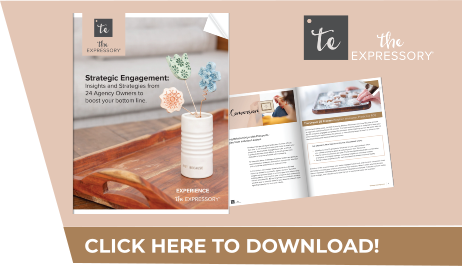
Need a bit
more inspiration?
Download our FREE ebook for strategic engagement examples that you can apply TODAY!
What Our Clients Are Saying...

“I can't tell you the number of times that the mailing of one of those packages has put someone on my calendar to reconnect with them.”
Shawndel Spader
Spader Group

Stephan Woessner
Predictive ROI
“I think you’ll be very pleasantly surprised, just like I was in how easy the process is. Why did we not do this years ago? Huge missed opportunity! I encourage you to no longer miss those opportunities and have the conversation with Jamie. I think you will be very pleased that you did."

Theresa Wilmot
Wilmot Designs
"Working with The Expressory for gifting is the perfect blend of giving a gift that is truly of your heart with the message you want delivered but the convenience and ease of having it done for you! The best!!"
What Others Are Experiencing
“Jamie and The Expressory are one of my most powerful assets as a small business owner. Client engagement beyond our direct service offering was a constant struggle in the past and we were failing to help show our appreciation for the amazing ways our clients support us, until I met Jamie and signed up for her services. Now my clients regularly tell me how much they love our beautiful and thoughtful cards. I have actually had stronger renewals from clients because they were touched by how much we actually cared about their lives outside of our studio. The Expressory is able to deliver on how we feel about our clients in a seamless and automated way that makes my team and business look great!”
Kevin Baker
Fitness Together
“Jamie and The Expressory are one of my most powerful assets as a small business owner. Client engagement beyond our direct service offering was a constant struggle in the past and we were failing to help show our appreciation for the amazing ways our clients support us, until I met Jamie and signed up for her services. Now my clients regularly tell me how much they love our beautiful and thoughtful cards. I have actually had stronger renewals from clients because they were touched by how much we actually cared about their lives outside of our studio. The Expressory is able to deliver on how we feel about our clients in a seamless and automated way that makes my team and business look great!”
Kevin Baker
Fitness Together
Ready to Take Control of Your Biz-Dev?
Join the Dream 25 Program and start building relationships that matter.
Experience the power of personalized engagement and see how it can transform your business.
Address:
1500 S. Sylvania Ave #106
Sturtevant WI 53177
Phone:
414.243.8971