
Take Control of Your Biz-Dev Efforts with Our
Dream 25 System
Drive Growth with Our Proven Approach to Finding and Nurturing Your Ideal Clients.
The Expressory is a STRATEGIC ENGAGEMENT AGENCY that helps you build the relationships that GROW YOUR BUSINESS


Learn More About the Dream 25 System
Most business owners rely heavily on referrals to generate new business. And for good reason – referrals are a great way to get new clients. But, referrals should not replace a holistic biz-dev strategy. If you are relying on referrals for the majority of your new business, your pipeline is ultimately in the hands of someone else. And that puts YOUR business at risk.
How do you take control of your biz-dev efforts?
What is the Dream 25 System?
Learn how our Dream 25 system helps you take control of your biz-dev pipeline, revolutionize your business relationships, and create connections that help you get – and retain – your ideal clients.

AUTHENTICALLY ENGAGING.
POSITIVELY ALTERING.
SIMPLY REMARKABLE.

Beyond gifts, we design and deliver touchpoints that make people feel seen, cared for, valued and appreciated.

Our engagement strategies ensure you stay top of mind with the people important to your business’s growth and success.
Journey Through Our Dream 25 Blog Series

The Growth Trap of Missed Moments for Financial Advisors
A perspective on financial advisor growth strategies rooted in stronger relationships
Let’s talk about a sneaky little trap that too many relationship-driven professionals fall into: the Growth Trap of Missed Moments.
I’m talking about the emotional, real-life cues your clients drop in passing. The small, unscripted moments that, when noticed, can deepen loyalty and set you apart. But only if you catch them. And the truth is, most of us don’t. For relationship-driven professionals, especially those focused on long-term success, this is an often-overlooked part of a sustainable business growth strategy for financial advisors. This is becoming even more common among younger generations, where digital-first communication has been chipping away at the relationship skills that used to come naturally.
The Missed Moments We Don’t Always Notice
As advisors, it’s common to tune in for the big stuff like weddings, retirements and new homes. These are the milestones that show up in annual reviews or make headlines in your client’s life.
But the moments that matter, more often, rarely come with a neon sign.
They sound like this:
“Nothing much new here. We’ve been helping my daughter think through launching a business.”
“We’ve been feeling a little stretched lately.”
“I just got back from a trip that reminded me how much I love the water.”
“My son is starting to look at colleges.”
These are emotional cues. Personal updates. They’re powerful entry points to deeper trust and more meaningful relationships. This is the foundation of a strong financial advisor and client relationship, even though it rarely shows up on a dashboard.
When these moments slip by, so do the chances to genuinely show you care. And when that happens, you’re also missing bigger opportunities. Like booking a follow-up to explore new services or being the first name that comes to mind when someone’s ready to make a referral.
Why These Moments Matter for Your Business
Clients don’t always offer personal updates during scheduled reviews or formal settings. They offer them when they feel relaxed. Heard. Safe. That means these insights are casually dropped in hallway conversations, Zoom small talk or even emails about totally unrelated topics.
When you do catch them and respond thoughtfully, you become unforgettable. This is how a financial advisor-client relationship moves from transactional to truly sticky.
In fact, in our recent Strategic Engagement Index research:
96% of leaders agreed that showing care improves profitability.
69% said they’re more likely to stay with a vendor who gives thoughtful gifts.
70% said they’d refer to someone who expresses care.
Strategic listening, or what we call Moment Mining, is a measurable growth strategy.
What Is Moment Mining?
Moment Mining is our phrase for this listening skill. This ability to notice and act on what clients are saying, feeling and going through in real time.
And yes, it is a skill, and one that’s increasingly rare in our fast-moving, phone-scrolling, notification-saturated world.
Here’s what it looks like in action:
A client mentions burnout. That’s a cue to check in later with encouragement or a helpful tool for stress.
Someone lights up talking about a trip. That’s an opening for a follow-up touchpoint that encourages them to plan another one (which has to do with how you help!).
Do they share a small win? Acknowledge it. Celebrate it.
Listening this way turns everyday conversation into relationship capital. It’s also easy to brush over this important approach building client relationships as a financial advisor.
Build a Catalog of Care
Here’s where most people get stuck. They hear the cue but aren’t sure what to do next. So the acknowledgement gets forgotten in the rush of emails and deliverables.
To avoid that trap, build what we call a catalog of care. Think of it as a ready-to-go resource for responding to different types of moments. You want it to include a variety of gifts or messages for each type of moment you can think of. This can include relevant articles, podcast episodes or books to share when the need arises.
Once you have the catalog, make sure you identify a go-to person on your team who writes handwritten notes. And consider keeping a stash of small, personal gifts, from the catalog, on-hand and ready to send.
This kind of prep turns insight into action. And action into loyalty.
Turn Small Questions Into Big Opportunities
Want to test this out today?
Next time you’re with a client, skip the script. Ask one or two of these:
“What’s something you’ve really enjoyed this month?”
“What are you celebrating right now—even if it’s small?”
“What’s been unexpectedly hard lately?”
And then … write it down.
Not just the facts, but the feelings. The shifts in tone. The spark in their eyes. These are the breadcrumbs that lead to high-value follow-up moments. The moments that show you care, remember and are someone worth sharing with others.
Why This Works
When you show up with thoughtfulness, and do it consistently, you’re building emotional loyalty.
And emotional loyalty is what keeps clients from shopping around. It’s what turns clients into referrers.
Because you know the saying - people don’t always remember what you said. But they always remember how you made them feel.
5 Questions to Ask Yourself Now That You’ve Read This
When’s the last time a client shared a life update outside of a formal review? And did I follow up?
Do I have a system for tracking those moments and emotional cues?
What’s in my catalog of care? Do I have gifts, notes or content ready to respond in real time?
Do I ask questions that reveal what’s really happening in my clients’ lives? Or do I stick to the script?
How would it change my client retention or referrals if I became known as “the one who really listens”?
Your business isn’t built just on numbers you’re delivering. It’s built on people. And the advisors who learn to mine these moments and respond with care are the ones who will continue to grow in today’s market.
Let’s make sure you’re never the advisor who missed a moment that mattered.
Frequently Asked Questions
Why do clients leave financial advisors?
Clients rarely leave because of performance alone. Most departures happen when clients feel unheard, unappreciated or emotionally disconnected. When communication becomes purely transactional, trust weakens and clients start looking for someone who feels more invested in their life, not just their portfolio.
What are the most common reasons clients lose trust in a financial advisor?
Trust erodes when advisors miss personal cues, fail to follow up on life updates or rely too heavily on scripted conversations. Inconsistent communication and a lack of personalization can make clients feel like just another account instead of a valued relationship.
How can financial advisors create stronger emotional connections with clients?
Emotional connection is built by listening beyond the numbers. Advisors who ask thoughtful questions, remember personal details and follow up with genuine care, show clients they matter. Small, consistent moments of acknowledgment often have more impact than big, formal gestures.
Why is listening so important in financial advisor client relationships?
Listening helps advisors understand what clients are feeling, not just what they are saying. Emotional cues often reveal concerns, goals or stress that may never appear in financial documents. Advisors who listen closely can respond in ways that build confidence, loyalty and long-term trust.
How does strategic listening strengthen the financial advisor and client relationship?
When clients feel heard and understood, they are more likely to stay engaged and loyal. Strategic listening allows advisors to anticipate needs, personalize communication and follow up in meaningful ways, reducing the likelihood that clients will seek another advisor.
What is the difference between transactional service and trust-based advising?
Transactional service focuses on tasks, reports and scheduled reviews. Trust-based advising focuses on relationships, emotions and life context. Clients who experience trust-based advising feel supported through both financial decisions and personal transitions, making the relationship harder to replace.
Can emotional connection really lead to more referrals?
Yes. Clients who feel emotionally connected are more likely to talk about their advisor and recommend them to others. Referrals often come from how clients feel about the relationship, not just the results delivered.
How can advisors move away from a transactional approach?
Advisors can shift by asking open-ended questions, documenting personal insights and following up on emotional cues. Creating simple systems to track client moments helps turn everyday conversations into meaningful touchpoints that strengthen trust over time.


Talk to one of our experience managers to find out how our done-for-you, end-to-end service, will handle all the fine details of your personalized touchpoints, so you (and your team) can stay focused on your core business and still ‘wow’ and show your clients, prospects, team and strategic partners that you care.
Dive Deeper with Our Resources

Creating Emotional Loyalty
Unlock the power of emotionally loyal connections to grow your business and foster lasting relationships.

Listen to How Strategic Engagement Makes You an Easy Yes
Join us as we delve into the Dream 25 strategy, sharing insights and stories that will transform your business approach.
Join our Monthly Q&A Session
Each month, we uncover how to give strategically & drive revenue so you can identify, close, and keep your best clients.
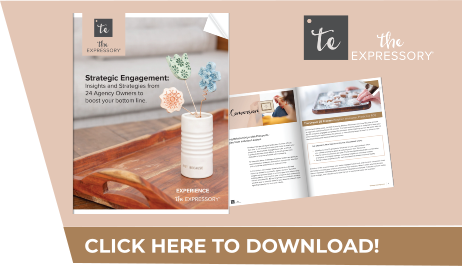
Need a bit
more inspiration?
Download our FREE ebook for strategic engagement examples that you can apply TODAY!
What Our Clients Are Saying...
“I can't tell you the number of times that the mailing of one of those packages has put someone on my calendar to reconnect with them.”
Shawndel Spader
Spader Group

Stephan Woessner
Predictive ROI
“I think you’ll be very pleasantly surprised, just like I was in how easy the process is. Why did we not do this years ago? Huge missed opportunity! I encourage you to no longer miss those opportunities and have the conversation with Jamie. I think you will be very pleased that you did."

Theresa Wilmot
Wilmot Designs
"Working with The Expressory for gifting is the perfect blend of giving a gift that is truly of your heart with the message you want delivered but the convenience and ease of having it done for you! The best!!"
What Others Are Experiencing
“Jamie and The Expressory are one of my most powerful assets as a small business owner. Client engagement beyond our direct service offering was a constant struggle in the past and we were failing to help show our appreciation for the amazing ways our clients support us, until I met Jamie and signed up for her services. Now my clients regularly tell me how much they love our beautiful and thoughtful cards. I have actually had stronger renewals from clients because they were touched by how much we actually cared about their lives outside of our studio. The Expressory is able to deliver on how we feel about our clients in a seamless and automated way that makes my team and business look great!”
Kevin Baker
Fitness Together
“Jamie and The Expressory are one of my most powerful assets as a small business owner. Client engagement beyond our direct service offering was a constant struggle in the past and we were failing to help show our appreciation for the amazing ways our clients support us, until I met Jamie and signed up for her services. Now my clients regularly tell me how much they love our beautiful and thoughtful cards. I have actually had stronger renewals from clients because they were touched by how much we actually cared about their lives outside of our studio. The Expressory is able to deliver on how we feel about our clients in a seamless and automated way that makes my team and business look great!”
Kevin Baker
Fitness Together
Ready to Take Control of Your Biz-Dev?
Join the Dream 25 Program and start building relationships that matter.
Experience the power of personalized engagement and see how it can transform your business.
Address:
1500 S. Sylvania Ave #106
Sturtevant WI 53177
Phone:
414.243.8971